UVA and UVB Explained: How the Sun’s Rays Affect Your Skin’s Health


UVA and UVB Explained: How the Sun’s Rays Affect Your Skin’s Health
The sun is essential for life—it provides warmth, light, and helps our bodies produce vitamin D. But too much sun exposure can harm your skin if you’re not careful. The two main types of ultraviolet radiation, UVA and UVB, affect the skin in different ways. Understanding the difference is key to protecting your skin’s health.
What Are UVA and UVB?
The sun’s ultraviolet (UV) radiation that reaches the Earth’s surface consists mainly of UVA and UVB rays.
-
UVA rays make up about 95% of the UV radiation that reaches us. They penetrate deep into the skin, affecting the lower layers where collagen and elastin fibers keep the skin firm and elastic. UVA exposure is the main cause of premature aging, wrinkles, and uneven pigmentation.
-
UVB rays are more energetic but don’t penetrate as deeply. They affect the outer layers of the skin and are the primary cause of sunburn. UVB rays also help the body produce vitamin D, but overexposure can damage the DNA in skin cells, increasing the risk of skin cancer.
Both UVA and UVB rays can harm your skin, so it’s important to protect yourself from both.
How UV Rays Affect the Skin
When your skin is exposed to UV radiation, it produces more pigment (melanin) as a defense mechanism. This gives your skin a tan and offers limited protection. However, too much exposure can lead to:
- Sunburn – an inflammatory reaction caused mainly by UVB rays.
- Premature aging – UVA rays break down collagen and elastin, leading to wrinkles and sagging skin.
- Pigmentation changes – dark spots and uneven skin tone can develop over time.
- Skin cancer – repeated DNA damage increases the risk of basal cell carcinoma, squamous cell carcinoma, and melanoma.
Even on cloudy days or through windows, UVA rays can reach your skin, meaning protection is needed year-round.
Sun Protection – Your Best Defense
The most effective way to protect your skin is to combine several forms of sun protection:
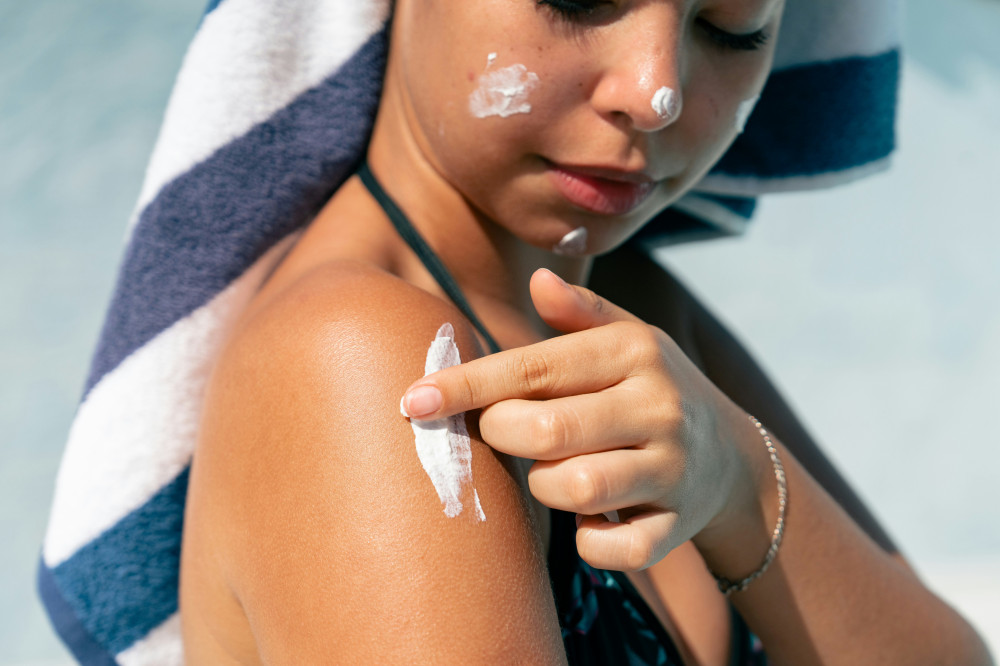
- Use sunscreen daily – choose a broad-spectrum sunscreen that protects against both UVA and UVB rays. Look for the label “broad spectrum.”
- Pick the right SPF – SPF measures protection against UVB rays. Dermatologists in the U.S. recommend at least SPF 30 for daily use and higher for extended outdoor activity.
- Apply enough and reapply often – most people use too little. Use about one ounce (a shot glass full) for your whole body and reapply every two hours, or after swimming or sweating.
- Seek shade – especially between 10 a.m. and 4 p.m., when the sun’s rays are strongest.
- Wear protective clothing – long sleeves, wide-brimmed hats, and UV-blocking sunglasses add an extra layer of defense.
Læs også:


Common Myths About Sun and Protection
There are many misconceptions about sun exposure. Here are a few of the most common:
-
“I don’t burn, so I don’t need sunscreen.” Even if you don’t burn easily, UVA rays can still damage your skin and accelerate aging.
-
“Sunscreen prevents me from getting vitamin D.” You can still produce vitamin D while wearing sunscreen, and most people get enough from incidental sun exposure or diet.
-
“I only need sunscreen in summer.” UVA rays are present all year long, even on cloudy or cold days, and can penetrate glass.
Understanding these facts helps you make smarter choices for your skin’s long-term health.
How to Choose the Right Sunscreen
When browsing the sunscreen aisle, keep these points in mind:
- Broad-spectrum protection – covers both UVA and UVB rays.
- SPF level – choose SPF 30 or higher for daily use.
- Water resistance – important if you’re swimming or sweating.
- Skin sensitivity – opt for fragrance-free or mineral-based formulas if you have sensitive skin.
For everyday wear, a lightweight sunscreen or moisturizer with SPF works well. For outdoor activities, pick a water-resistant formula and reapply frequently.
An Investment in Your Skin’s Future
Protecting your skin from the sun isn’t about avoiding it completely—it’s about enjoying it safely. Consistent sun protection is one of the most effective ways to prevent both skin cancer and premature aging.
By understanding the difference between UVA and UVB rays and taking simple precautions, you can keep your skin healthy, strong, and radiant all year long.
Læs også: